
Recent instability in the Middle East has increased volatility in global fuel markets. For industries that rely heavily on diesel generators, such as mining operations, construction projects, and remote industrial sites, fluctuating fuel prices can significantly increase operating costs.

Energy storage systems are emerging as an effective way to reduce dependence on diesel generation. In many applications, battery energy storage can partially or even significantly replace diesel generators by supplying electricity during low-demand periods, supporting peak loads, and reducing the need for generators to operate continuously.
Reducing Fuel Consumption and Operating Costs
Diesel generators often run continuously to ensure stable power supply, even when electricity demand is low. This operating pattern leads to inefficient fuel consumption and increased equipment wear.
By integrating energy storage into the power system, generators can operate closer to optimal load levels or be temporarily shut down when demand is low. Hybrid deployments show that energy storage systems can typically achieve 20–40% reductions in diesel fuel consumption, 30–50% reductions in generator runtime, and about 50% lower generator maintenance costs. For remote sites where fuel transportation is expensive, these improvements can significantly reduce overall operating costs.

Alternative and Hybrid Energy Architectures
Energy storage also enables more flexible power system designs. In locations with strong solar resources, photovoltaics combined with energy storage (PV + BESS) can serve as an alternative power solution for part of the daily electricity demand, with solar generation supplying daytime loads and batteries storing excess energy for later use.
For operations that require continuous and reliable power, (photovoltaics) energy storage and diesel generators ((PV) + BESS + DG) can be combined in a hybrid system. In this configuration, solar power and battery storage provide a large share of daily electricity demand, while diesel generators act as a supplementary source when renewable generation is insufficient.

Economic Benefits and ROI
Reducing generator runtime directly lowers fuel expenses. Depending on system configuration and fuel prices, energy storage projects typically achieve payback periods of around 2–4 years, with annual fuel savings of €100,000–€500,000 for mid-sized industrial sites and overall operating cost reductions of 15–30% compared with diesel-only systems.
Energy storage systems are particularly valuable in industries that rely on diesel generation or operate in areas with limited grid access. Remote mining operations, oil and gas projects, and large construction sites often depend on diesel power to support heavy equipment and continuous industrial activity. By integrating energy storage, these operations can reduce generator run time, stabilize power supply, and lower fuel consumption.
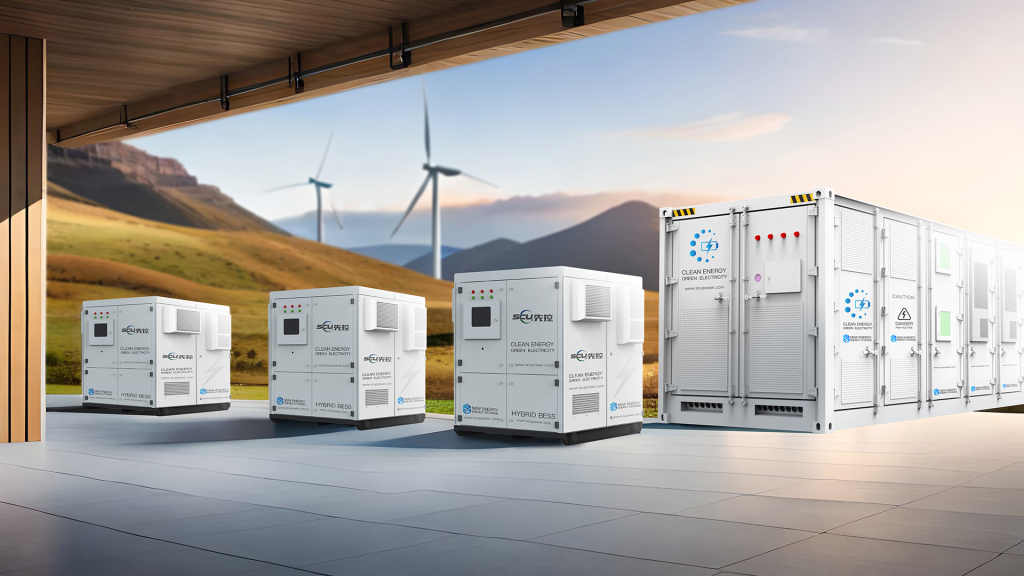
Energy storage is also increasingly adopted in off-grid communities, island power systems, and temporary industrial facilities where fuel transportation costs are high and power demand fluctuates throughout the day. In such environments, hybrid systems combining solar generation, energy storage, and diesel generators provide a more efficient and resilient energy solution.